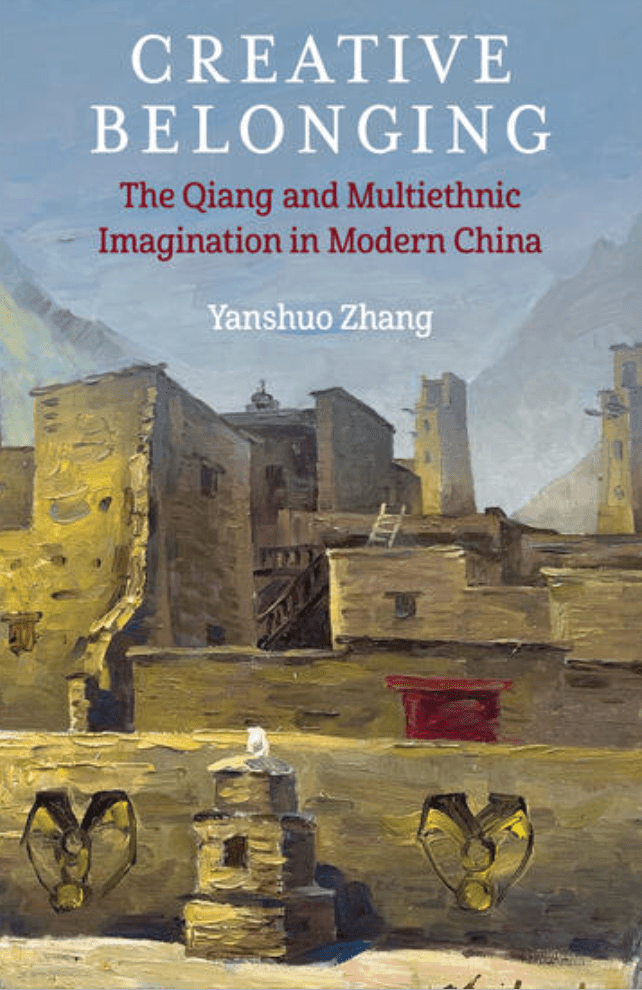
China is a multicultural country home to fifty-five ethnic minority groups, yet due to linguistic and cultural barriers many of these groups remain understudied or unknown in the West. The Qiang, one of modern China’s officially recognized ethnic minorities, is also China’s longest-standing ethnoracial identity marker that has existed since the earliest recorded history of China. Creative Belonging investigates the formation and evolution of the Qiang as a people, a concept, and a cultural history in China. It further examines how the contemporary Qiang ethnic group interacts strategically with mainstream Chinese society, challenging the historically entrenched hierarchies between the sociocultural “centers” of China and its ethnic “peripheries.”
This book is based on years of ethnographic and textual-archival research in the Himalayan regions of southwest China, where the contemporary Qiang group resides. Drawing on a diverse range of official and local political discourses and previously unstudied literary, historiographical, and cinematic works, Yanshuo Zhang illuminates how the Qiang have carved out spaces of “creative belonging” within the parameters of multiculturalism in contemporary China. Rooted in ethnographic and textual-archival research, the book presents original materials produced by Qiang indigenous writers, scholars, artists, grassroots village cultural activists, and entrepreneurs at both the local and the global levels.
Choice is a premier platform for academic titles and scholarly collections in America. According to its website, “Choice is a publishing unit at the Association of College & Research Libraries, a division of the American Library Association. Together, Choice and ACRL provide a wide range of critical resources to help librarians identify worthwhile academic sources as well as professional development tools to help librarians strengthen their skills and further their careers.”
Creative Belonging has also been featured by China Books Review, maintained by the Asia Society’s Center on U.S.-China Relations. China Books Review is a public-facing platform that features important new English-language books on Chinese history, society, art, and politics. https://chinabooksreview.com/upcoming-china-books/
Please read my author’s post, “Foreign No More: Writing about China’s Ethnic Minorities as Epistemological Experiments,” from the University of Michigan’s Authors’ Posts: https://press.umich.edu/Blog/2026/01/Foreign-No-More
Table of Contents :
Introduction: Conceptualizing “Creative Belonging”: Towards an Interdisciplinary and Multicultural Paradigm of Chinese Studies
Part I: Imagining the “Qiang” in Chinese National Narratives and Minority Scholarly Debates Chapter 1: From “Barbarians” to “Brothers” and Cultural Guardians: Race, Ethnicity, and the Invention of the “Qiang” in Chinese Textual Traditions and National Discourses Chapter 2: “King Yu Rose from West Qiang”: Minority Scholarly Production and the Cultural Politics of Imaginary Ancestry in the Qiang Regions of China
Part II: Visualizing the “Qiang” in Cinema, the Built Environment, and Tourism Chapter 3: A Village’s Affair with the World: Visual Culture and Representing the Qiang Native Village in Transnational Cinema and Tourism Chapter 4: The Run-away Minority Bride: Fluid Indigeneity and Ethnographic Poetics in Qiang Indigenous Cinema
Part III: Reconstituting the “Qiang” in Literary Voices and Cultural Activism in the Himalayas Chapter 5: Between the Languishing Ethnic Mother and the Bewitching “Poisonous Cat:” Gender and Commercialization in Contemporary Chinese Minority Literature Chapter 6: Paradise Recrafted: The Problems of Secular Modernity in Chinese Multiethnic Literature and Village-level Cultural Activism
Conclusion: The “Qiang” as Concept, History, and People Bibliography Index
Creative Belonging has received advance praises from leading scholars in China Studies across different fields:
“Creative Belonging is a fascinating study of the Qiang in contemporary China that challenges disciplinary boundaries by adopting an interdisciplinary methodology—including cultural anthropology, ethnography, cultural and media studies, ethnic studies, and literary criticism. As such it will interest scholars and students in a wide range of areas from cultural ethnography to borderland studies, from media studies to socialist affect studies.”- David Der-wei Wang, Harvard University
“This theoretically nuanced study draws on a range of different types of material, including films, literary writings, and ethnographic observation, to reflect on how the Qiang are currently perceived and how they perceive themselves, while at the same time reflecting on the ways in which ethnonational identity has been constituted in modern and premodern China.”- Carlos Rojas, Duke University
“Yanshuo Zhang defies disciplinary boundaries to introduce a variegated array of Qiang cultural texts and practices, advancing the argument that the Qiang ethnic group has been constructed ambivalently as both constitutive of and other to Chineseness. Rolling out concepts such as ‘ethnographic poetics,’ ‘fluid indigeneity,’ and ‘discursive self-fashioning,’ this lushly illustrated study illuminates the complex processes and struggles that go into the creative imagining of a Chinese national identity that is decidedly multiethnic.”- Louisa Schein, Rutgers University
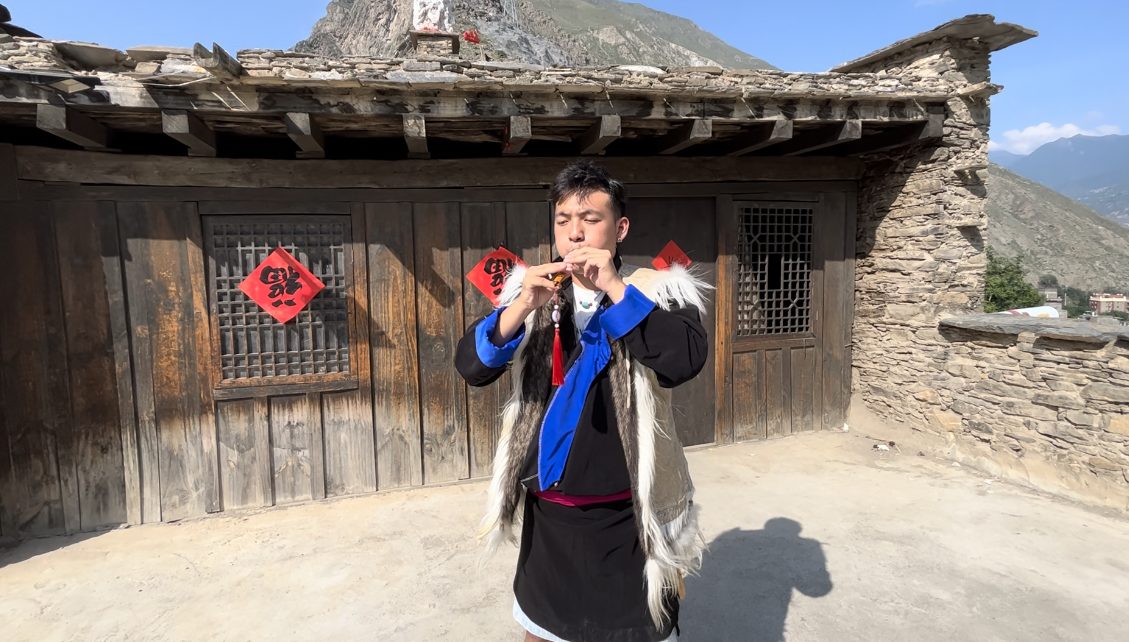
(Young Qiang musician Renmu playing Qiang reed pipe 羌笛 in Taoping Qiang Village 桃坪羌寨 in summer 2024. Photo by Jingui Zhang)
“Creative Belonging” explores how the “Qiang” is at once a concept, a people, and embodies a cultural history in China; it uncovers the rich, lived histories of a minority group with roots and myths dating back to the earliest recorded history of China…
Creative Belonging invites readers to rethink ethnicity and national belonging in China by centering minority groups’ effortsto expand the meanings and implications of “Chinese culture.”
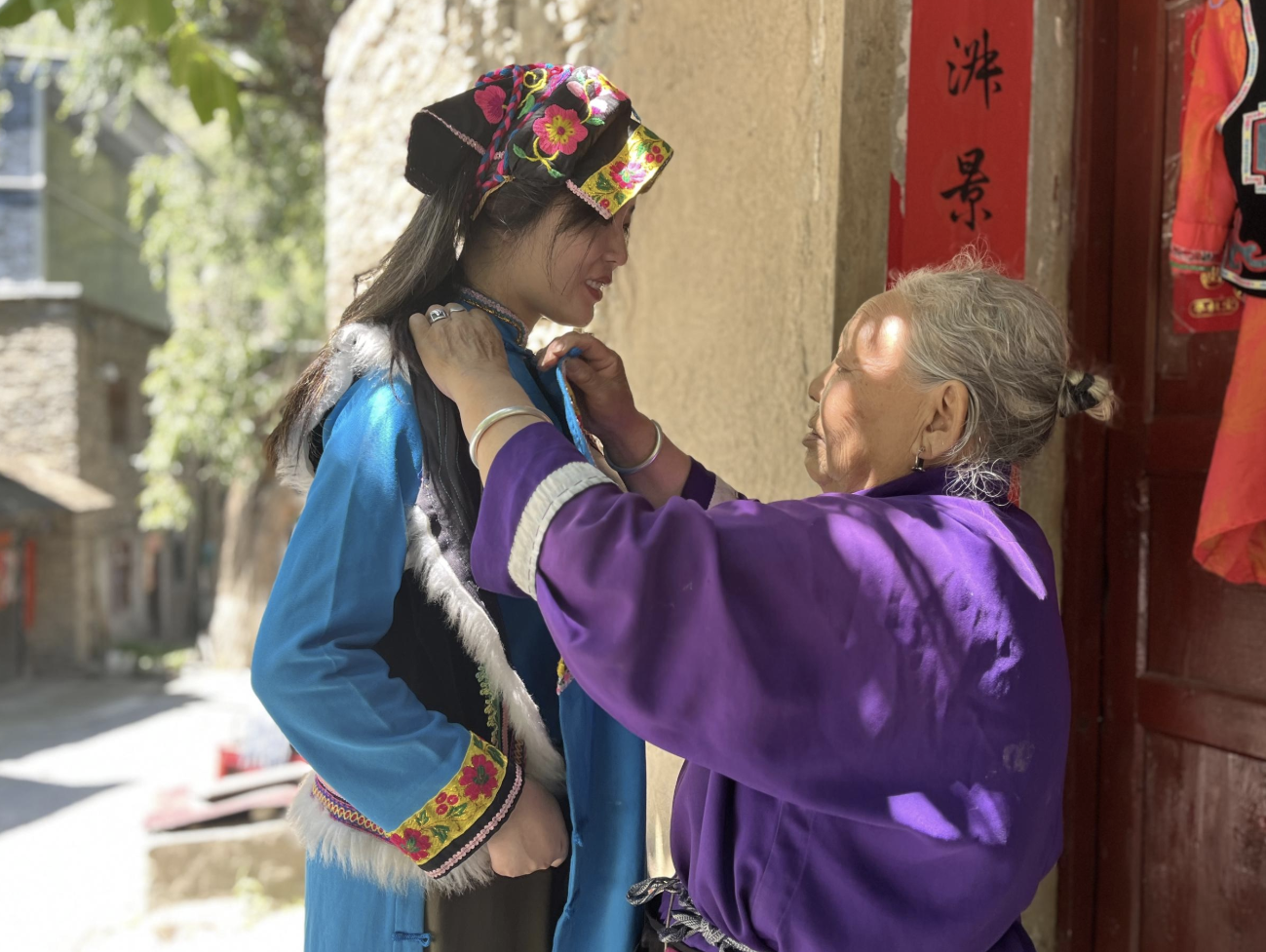
Prof. Yanshuo Zhang (left) trying out Qiang women’s attire hand sewn by Granny Yu, her long-term field friend and informant. Photo by Jingui Zhang
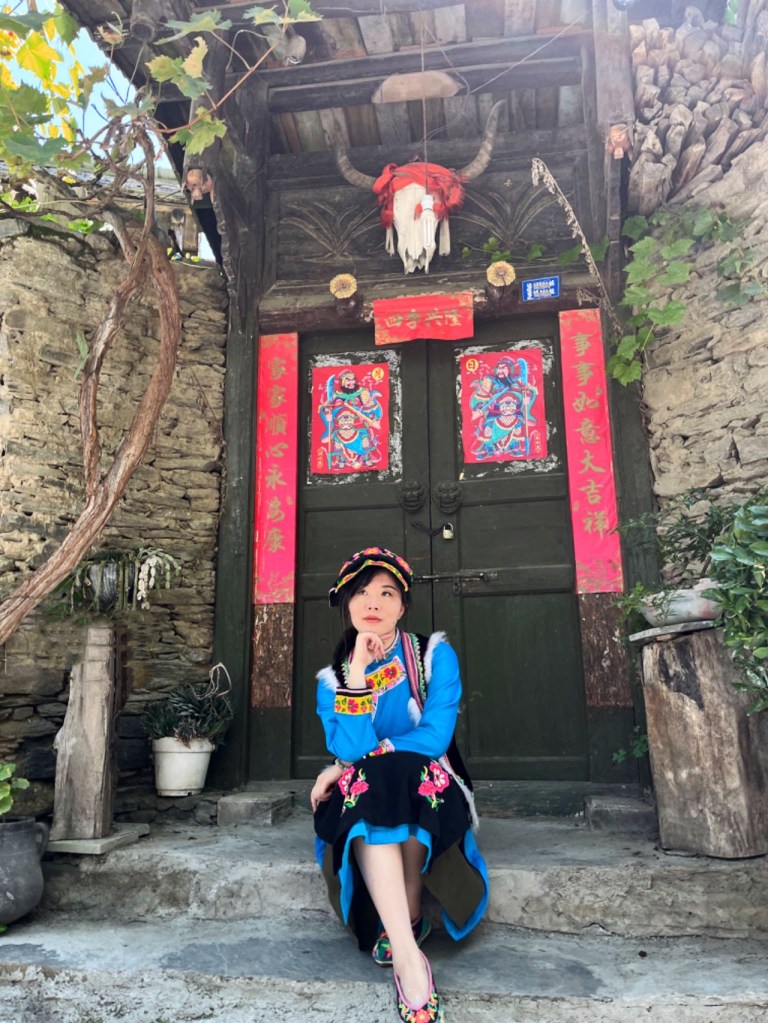
Yanshuo Zhang in Taoping Qiang Village in traditional Qiang women’s attire. Photo by Xiaoshuang Li
 Yanshuo Zhang